The Atlantic Research Team is our in-house editorial staff. Content published under this name is a collaborative effort, written and reviewed by multiple safety and HR specialists to ensure all information is accurate, practical, and up to date.
Working in an office might seem low-risk, but it can have long-term physical effects, especially if your job keeps you sitting all day. That’s where office ergonomics come into play. By making a few simple adjustments to your posture and workspace, you can prevent issues like computer eye strain, musculoskeletal disorders, and more. This infographic …
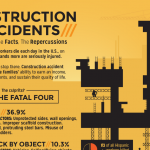
The “Fatal Four” in construction are the four deadliest hazards that cause a significant number of fatalities year after year. These hazards are responsible for the majority of construction deaths, making them a critical focus in safety training programs. The top causes of these fatalities are Falls, Struck-By incidents, Caught-In/Between accidents, and Electrocutions. This infographic …
One of the main causes of forklift accidents involves warehouse pedestrians, either because they aren’t seen or because items are bumped and fall onto them. Given that forklifts are large and dangerous pieces of industrial equipment, it’s crucial for workplaces to focus on warehouse pedestrian safety. This infographic explores the connection between forklifts and injuries, …
Even though we might not think of the office as a hazardous place, dangers still exist that can cause serious harm if we’re not careful—one of the biggest being office fire hazards. Just like in our homes, fire hazards can be hiding anywhere in the office. Given that many of us spend over eight hours …
The numbers on daily construction-related deaths in the U.S. are pretty eye-opening. Construction is consistently ranked as one of the most dangerous industries, largely due to four major types of accidents. This makes it crucial to focus on improving safety and reducing hazards on the job site. According to OSHA, “construction is a high-hazard industry …
I often find myself (arrogantly) believing that because I work in a non-threatening office setting, I’m impervious to workplace safety hazards. I look around the typical office and I see non-threatening fluorescent lighting, drab carpets, innocent office chairs and complacent computers. It’s not like I’m risking my life walking up on tall buildings or working …
In today’s environment, delivering efficient and effective workplace safety training has become more important than ever. The ever-changing environment of workplace training is a model that will continue to be dynamic. In the beginning, these classes were strictly held in the classroom, requiring the entire team to stop working and sit through extensive safety training. …
Hospitals and medical facilities alike, are challenged each day with the responsibility of keeping their patients healthy while also keeping them safe. With these goals and challenges at hand, medical staff find that they are both intertwined. Patient safety concerns find themselves going hand-and-hand with patient health concerns. With areas such as administering medication, patient …
The United Nations’ Globally Harmonized System of Classification and Labelling of Chemicals (GHS hazard communication) is due to be fully implemented in the United States within the year. According to OSHA, “The new standard covers over 43 million workers who produce or handle hazardous chemicals in more than five million workplaces across the country. The …