September 5, 2016
Workplace Fire Safety: A Simple Guide & Infographic

September 5, 2016
Let’s talk about workplace fire safety. It’s one of those things that’s easy to ignore… until you smell smoke. A fire can break out in seconds, and having an effective plan (and knowing the risks) is the only thing that matters in that moment. This guide breaks down the key stats on workplace fire safety, what you need to know, and includes a free infographic you can share.
Understanding the risk is the first step to preventing it. While the infographic below shows the stats, the main culprits are almost always the same:
In a fire, panic makes you forget everything. That’s why safety pros rely on simple acronyms. These are the two most important ones for workplace fire safety.
If you are trained and the fire is small (no bigger than a small trash can), use the P.A.S.S. method:
If the fire doesn’t start to go out immediately, get out. Your life is not worth saving a building.
This is the plan for a full-scale evacuation. This is what you drill into your team.
The numbers don’t lie. Here’s a breakdown of the statistics regarding workplace fire safety.
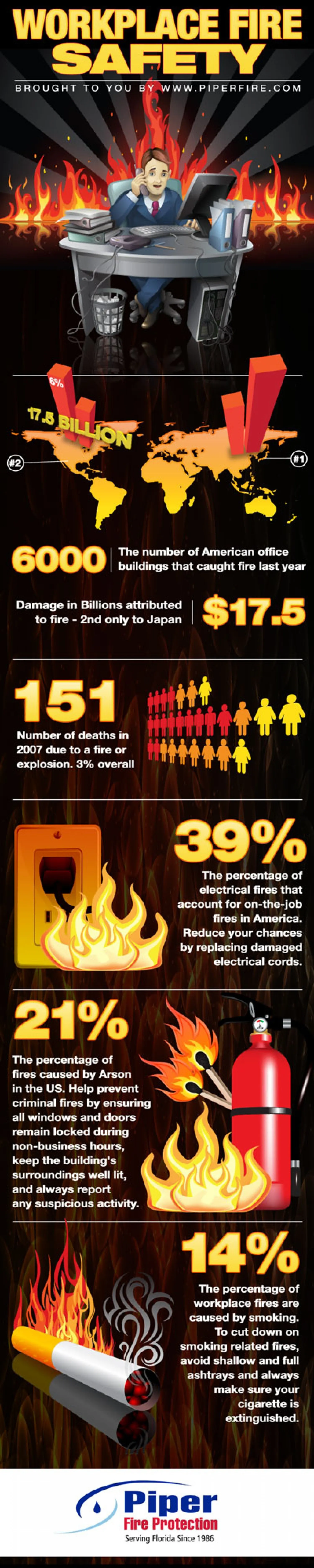
Want to make sure your team is prepared? A Fire Safety Training course is the best way to ensure everyone knows these life-saving steps.
The top causes are often related to human error. This includes faulty or misused electrical equipment (like overloaded power strips), heating (like space heaters too close to paper), and cooking equipment left unattended in a breakroom.
P.A.S.S. is an acronym to help you remember how to use an extinguisher: PULL the pin. AIM the nozzle at the base of the fire (not the flames). SQUEEZE the handle. SWEEP the nozzle from side to side.
R.A.C.E. is an emergency evacuation plan: RESCUE anyone in immediate danger (if safe to do so). ALARM (pull the alarm and call 911). CONTAIN the fire (by closing doors as you leave). EVACUATE the building immediately.